Let’s face it – auditions can really, really suck. You stress about them, you get more and more nervous as the day approaches, you enter the room and your heart is in your throat. Every time, you ask yourself “Why do I put myself through this? Why do I do this to myself?” Of course, you know the answer – it’s because you love theatre and you love to perform. Still, you’d pretty much rather be anywhere else than that room at that moment.

Auditions are a necessary evil. As someone who has been on both sides of the table, no one enjoys it – even the directors and producers would probably rather be elsewhere and not listening to fifty different versions of “Memory.” But, there are ways to get more out of the experience besides a stomachache and unwanted cardio from your hamster-esque heart rate.

So, without further fanfare, here are ten tips to beat the audition blues:

  1. Set your mind on a goal for the audition. It is extremely important to set goals that are within your power to achieve. Accordingly, “getting cast” isn’t a helpful goal, as that is not up to you. Some goals my students have set include “feeling good walking out of the audition,” “singing a rock song for an audition,” “going to one audition a month,” etc. If we focus on goals that are within our power to achieve, the importance of others’ opinions starts to fade.
  2. Select an excellent song for the audition, one that shows you off at your best and one that you really enjoy singing. I have some guidance for audition song selection here. Be prepared to answer questions about your audition song (composer, show, character, plot, etc.).
  3. Prepare your song well – you should be able to sing your audition song well no matter what else is happening in the room. I tell my students “we want you to be able to keep going even if the USC Marching Band starts marching into the room with their tubas and drums.” Whether or not you will remember your lyrics or notes should not be a concern at this point; if it is, you are putting unnecessary stress on yourself. There are so many variables that you will not be able to prepare for; perhaps the accompanist isn’t very proficient, perhaps the director is falling asleep right in front of you, perhaps there’s loud construction happening outside and there’s a loud BANG in the middle of your song. You can’t control any of these things, but you CAN control how prepared you are and whether you are solid on your material.
  4. Have your audition outfit selected and tried on at least 24 hours in advance. I mean the ENTIRE OUTFIT, including your shoes. Pick it out, try it on, make sure everything fits and is clean and wrinkle-free (unless your character calls for something else). Then, take it off and put everything somewhere safe where you can just grab it the next day.
  5. If you will be singing, make sure your audition cut is clear and marked appropriately. It should be in a binder with as few pages turns as possible. If you aren’t sure whether the music is OK, ask me or other friendly accompanist to take a look for you.
  6. Pack extra headshots/resumés, just in case. If you’re singing, tuck a copy of your resume in the front of your binder so the pianist can see it.
  7. Fully warm up your voice and your body at home. Vocal warmups to get your voice going and gentle body warmups to alert your body and get yourself focused. Do a mini-version of the warmups after you arrive to refocus.
  8. Try to not arrive at the audition too early. You will need to allow for traffic, etc., but sitting there for too long will only increase the nerves. Ideally, you want to walk in, sign in, and have no more than a 5 minute wait. If you arrive earlier than that, wait in your car or go for a short walk outside.
  9. Think of the audition not as an audition but a performance. You’re here because you love performing, right? Well, now you have an audience and you get to perform for them! Even if it’s only for a minute, you get to strut your stuff and that’s something you love to do. The audition is about YOU, not them.
  10. Along those lines, remember that you have no idea what’s on the panel’s mind, and you never will. Don’t waste time trying to figure out what they want beyond what they tell you in the audition notice. They could have already pre-cast the role you want. Their mom could have passed away and they’re staring at you funny because you look just like her. They could have a horrible migraine and want to be anywhere else. They could have dated Stephen Sondheim so now they automatically dismiss anyone who sings Andrew Lloyd Webber – YOU JUST DON’T KNOW. And because you don’t know, don’t fill in the blanks. If you don’t get cast, that’s all it is. You didn’t get cast. Try to avoid “I didn’t get cast, and I’m sure it’s because……” as that will only get in your way the next time.

BONUS TIP: HAVE FUN! You get to play a role, even just for a minute. You get to be in front of people, you get to sing and/or act, and you get to strut your stuff! Make some art at your audition and forget about the torture of the process. If they love it, great! If not, also great! You don’t need to be cast to be validated – if you’ve followed these steps, you’ve done your best and that’s amazing!

Now get out there and break a leg!
My new business cards arrived and I am in LOVE! I’m really not very artistically-inclined when it comes to the fine arts – any of my friends who do graphic design will tell you I hire them quite often – but I’m super pleased with how they turned out.

Great news! You found out your local theatre is producing your favorite show, and YOU are going to audition!

First things first – what song are you going to use for your audition?

I help my students answer this question ALL THE TIME. I thought I would share how we figure this out together.

Our goals (all equally important):

  1. Selecting repertoire that shows off the performer at their very best.
  2. Connecting with and encouraging the panel to feel something.
  3. Making it easy for the panel to picture the performer in the role.

First and foremost, the universe must start with the audition notice and its requirements.  It is essential to only look at repertoire that is appropriate for the audition.  If it says to only audition with material from the show, your preparation/selection will be quite different than if you can come in with anything.

Second, if you were cast, where would you best fit? What role is best for you? This is the role that is best suited to your voice and your acting abilities, not necessarily the most fun role or your favorite role. This is where outside help can be very helpful; as humans we can’t always be objective when it comes to ourselves and where we best fit. It is also helpful to have an understanding of your unique strengths – what can you do that only a few others or no one else can?

Third, it is time to research.  Assuming you have a large universe of options, there are many, many different directions you can go using the information collected above.  I encourage you to start with your preferred role – have any of your vocal twins ever played the role or one of the similar roles you identified?  If so, this is a very good sign you are targeting the right role.  Make a list of all songs that your vocal twin has performed (or at least you can find on YouTube) of the same lyricist/composer and their contemporaries. 

Then, next level: which songs on the list match up best to the role you want? If the role you want mostly sings belty torch songs about love, then those are the songs on the list you want to focus on.  Same if it’s all patter songs in the role. 

Finally, in which of the remaining songs can you find the strongest opportunity to connect with the panel?  Make them laugh, make them cry, make their jaw drop, some sort of stand-out moment that you can deliver well.  You want to make the biggest possible impact; when they are sorting through all of the headshots at the end of the day, you want them to see you and say “Oh! He was the one who made me cry!” Or laugh, or think about a song differently, etc. This is the opportunity to show your unique strengths and make an impact!

Using these steps, you can find an audition song that will allow you to shine your very best, connect with the panel, and make it easy for them to picture you in the role. I help my students stay booked using this formula – and now you can too! Get out there and break a leg!

Hey y’all! This Saturday is the first Saturday of the month, which means it’s time for First Saturday Dance! Once a month, we get together at 9am at The Dancehouse and I teach a simple dance combo related to a theme such as hip hop, musical theatre, 80s, Madonna, disco, and so much more. This month we’re dancing to hip hop, which is probably my favorite style overall.

Ever wonder how First Saturday Dance came to be?

I was pigeon-toed as a kid (still kinda am, to be honest) which meant ballet only lasted one year when I was eight. This was a huge disappointment for me, but I just didn’t fit in with the dance kids. I started doing theatre not long after, and the remainder of my youth “dance training” was through doing shows and dancing my ass off in my bedroom on a daily basis. I danced to everything; musicals, pop, R&B, all of it. I choreographed entire shows from start to finish and zillions of music videos right there in my bedroom.

When I went to college for my degree in Musical Theatre, I had to take ballet again. Again, it was a nightmare; I remember the instructor physically wrenching my left foot while I hung onto the barre, desperate to get some kind of turnout while everyone else stared. Again, my feet wouldn’t budge. It was so demoralizing and placed me firmly in the category of “not a dancer.” Not only was I not skinny, not only was I taller than everyone, but I can’t even turn out my feet.

After college I left music for a time and began a law career, but in my late 20s I became quite sick. I was very fortunate to have excellent care and a supportive family, and as part of my long recovery I had been gifted a gym membership. I remember wandering into the gym, somewhat frail and unable to work at the time, and slipping into the back of whatever exercise class happened to be going on at the time. It turned out to be a dance class and I breathed a sigh of relief – this was something I could handle. The class was fun, it had great pop and hip hop music and the moves were very familiar; they were the sort of generic dance moves I had naturally come up with as a child. I now had a place to go every Friday.

With each week, my confidence grew and I slowly inched my way towards the front to better see myself in the mirror. The instructor had taken notice of me, and after class one day she asked me if I would like to be trained to teach the class! I was still recovering, but my soul lit up at being asked to participate. I completed the training and went on to teach the class for about five years. I really loved creating a safe space where everyone could dance and not care whether the moves were perfect; I was never, ever going to make anyone feel bad for what their body couldn’t do. I estimate over that time I taught over 200 different dance routines, and the hip hop routines were my favorites. Those routines were often my participants’ favorites as well – there’s something so fun about getting deep in your legs and push/pull with your movements and the music is fantastic.

After I moved to San Diego, I approached several gyms with my class yet had no takers. I realized I needed to let go of trying to recreate my New York life in California, and let my California path develop naturally, and so my class (and dance in general) went on the shelf in 2012. But of course, I never stopped dancing in my bedroom.

Fast forward to 2022. I’ve left my law firm job and have decided to focus on music and new paths. But, I’m stressed. I’m REALLY stressed and I need to let it out. I need to pound a dance floor; dancing in my apartment just isn’t cutting it. And just as it tends to happen in my life, the universe answered. A dance space fell into my lap the very next day. I now had a space, plenty of rage, and choreography ideas coming out my ears. I was so excited to have that space, but I also felt like I wanted to share that space with people. I reached out to some folks and invited them to join me if they wanted to learn a dance combo. Fortunately, they were willing to come see what the hell I was up to (I’m pretty sure hardly anyone knew that I had taught dance beforehand, LOL).

We had a blast, and that wonderful feeling of dancing with others came flooding back. It had been so long that I had forgotten what a big part of me needed this, needed to dance with others in a safe space, free from judgment. And even though I’m still figuring out some things, the overwhelming joy I felt that day meant I needed to get teaching dance back into my life, pronto. And so, here we are over a year later!

I can’t wait to see everyone on Saturday – let’s dance!

Whether you’re a seasoned pro or a beginning singer, it’s important to know who your “vocal twin” is – and you can definitely have more than one!

Who is your vocal twin? Your vocal twin is a well-known performer who:

  • is within ten years of your age;
  • has a similar vocal range and style to you; and
  • plays or has played roles that would be a good fit for you.

The purpose of finding your vocal twin is not to copy their every move; in fact, I highly discourage it. When it comes to repertoire selection, however, your vocal twin can be a goldmine!

It can be so overwhelming to pick a song for your audition book. “Golden Age Tenor Ballad” is unhelpfully generic and will generate a thousand results. However, if your vocal twin is Gavin Creel, take a look at what Golden Age repertoire he’s done, either as part of a role or in concert. His YouTube channel could help you map your audition book and find those songs that sit perfectly in your voice because he’s found the songs that fit perfectly in his.

It’s important when selecting your vocal twin(s) to be honest with yourself about your sound and to get outside opinions if possible. It can be very challenging to separate the type of singers you love to sing along with from the singers who actually sound like you. Believe me, I’ve had to come to terms with the fact that I do not sound like Mary Bond Davis or Bebe Neuwirth (much to my chagrin). I’m a soprano and my training is more classically based, so my vocal twins are singers like Audra McDonald and Kelli O’Hara. While we wouldn’t always play the same roles, their catalogues have been fantastic resources for me.

When it comes to selecting repertoire, the sheer volume of options can be so overwhelming. By finding your vocal twin, you help narrow the path to the perfect audition song!

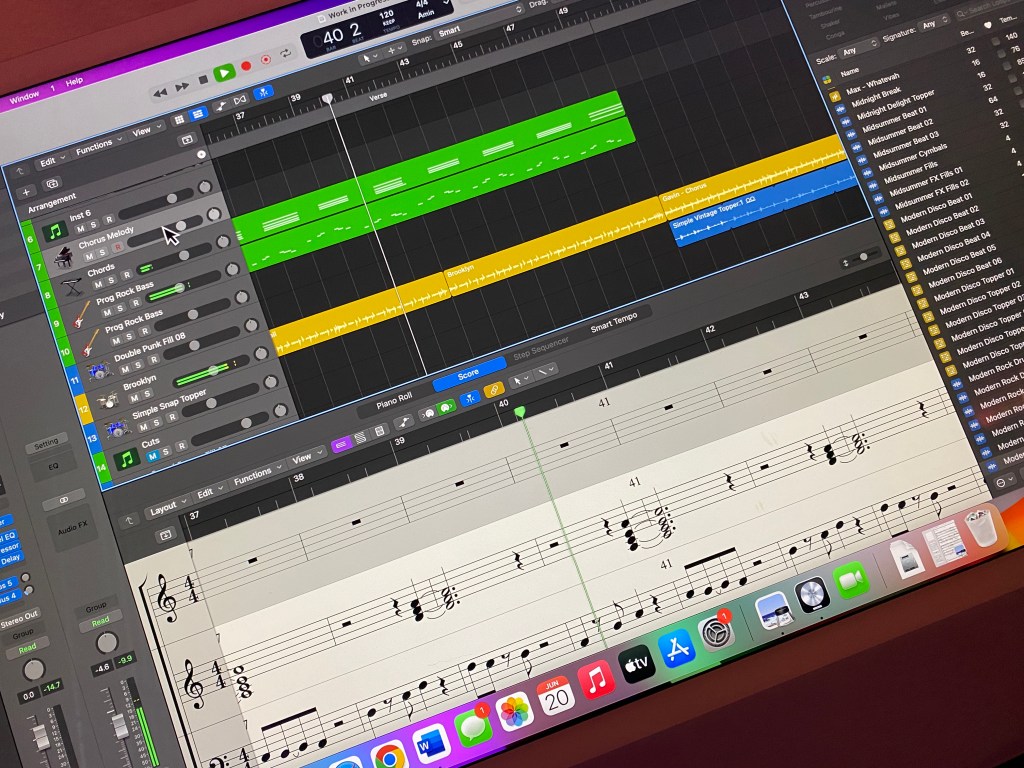
I never knew how much fun I could have in my home studio until I started working in music full-time. I have been fortunate to have a lot of my business come in the form of preparing practice resources, recordings, and sheet music for people. I used to pretend to be a DJ when I was a kid, and now I sorta feel like the real thing.

Being self-taught is wild, though. There’s so much I don’t know and that I’m probably missing. I don’t know what in the world I’d do without YouTube tutorials and my knowledgeable friends. I remember being stuck overnight in the Philly airport and deciding out of sheer boredom to open up GarageBand on my computer and start fiddling around. Fast forward to now….

Who else can say that they’re grateful for the 26 hours they were stuck at the Philly airport at Christmas? LOL. Although, on the flip side that event did officially put an end to my travels to NY in winter.

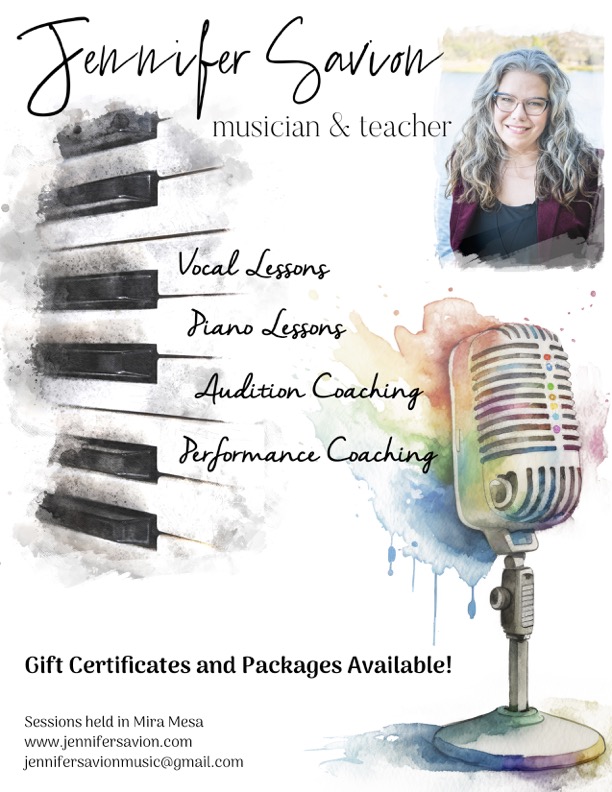
I’m so excited to start using this new flyer, designed by the one and only Shae Hudson! Find her on Insta @shaehudson41

I absolutely love teaching and sharing what I know to support others in their love of music and theatre. My goal is for every lesson to feel like a safe space to play and have fun, and this absolutely includes my adult students! If you’re curious about lessons, I’d love to hear from you!

I am beyond thrilled to announce my upcoming EP, “Learning Love” and reveal the cover art (masterfully designed by Eric Carroll).

Learning Love is a collection of five songs from my favorite songwriters, performed in an intimate setting of voice and piano. They all explore some aspect of love, whether romantic, familial, or friendship, and celebrate the joys, excitement, frustration, chaos, and self-discovery that are all a part of the journey.

Learning Love also has a subtext, and that is my own personal journey through this process. For years, I have wanted to start recording, but I have always talked myself out of it for various reasons, usually stemming from anxiety and insecurity. But, the past couple years have gifted me with a growing desire to prioritize my health and happiness, and I am learning how to care for and support my own creativity instead of judging it and shoving it aside.

Then came the deadly pandemic. This, along with the loss of my brother David this summer, brought home to me the undeniable truth – that we are only gifted a precious little amount of time on this earth, and no one knows when our time is up. Friends, there is no time but now, and no day but today (with love to Jonathan Larson).

And so, Learning Love was born. It will be released very soon – stay tuned for updates!