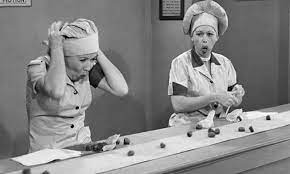
“One chocolate at a time.”

This was the best piece of advice I received from one of my college acting professors, who was otherwise quite a sketchy dude. But, at the start of our senior year in college, he played this famous scene from I Love Lucy and reminded us that when our senior year inevitably became impossibly hectic that we should remember to focus on one chocolate at a time.

I’m having one of those times where I need to remind myself of this. So many balls in the air, so many things to possibly drop. New jobs, new students, new shows, new performances, new creations, new stressors, all wonderful things but they are coming down the line at hyperspeed….

I know some of you also feel this way – say it with me: One chocolate at a time 🤘

At yesterday morning’s service at St. Peter’s, the rector turned to the choir as she always does every Sunday and offered her thanks for the musicians at the service. Note, friends, that she referred to us as “musicians,” and I appreciate it every time.

That’s because, unfortunately, the music world tends to perceive singers as “less-than.” To some, we are simply either lucky or, at best, trained monkeys. It is often assumed we do not know anything about music and that we can only copy what we have heard on a recording. I have literally been asked in an audition what key a song was in, and after I answered correctly I was immediately interrogated on how I could possibly know such a thing. Another time, I was a paid section leader in a choir, and when I offered to help a bell ringer with his part he told me “thanks, but it’s in bass clef,” as if that would be a hindrance. Another church I worked at neglected to provide me with a name tag after a year of me asking, yet the new pianist had a name tag his very first day. How many times have I heard “there’s a budget for the string quartet/pianist/bagpipe player but not for the singers.” (Countless.) And of course, there are the multitudes of masterworks performed where the conductor thanks the “musicians and singers,” which doesn’t ever help.

I have news for y’all. A singer is every bit as much of a musician and artist as any instrument player. Our music comes from within our body – we create something from nothing, with no help except for, well, I don’t know, THOUSANDS OF HOURS OF TRAINING AND PRACTICE. People applaud the concertmaster and muse they must have spent their youth practicing and a fortune on lessons, but what of the singer? I have spent so much time in practice rooms, classrooms, choir rooms, lessons, plus a four-year degree; and we’re not even going to discuss the cost.

Of course, I do not mean to detract from the skill and knowledge of the instrumentalist; I only argue that singers are entitled to the same respect and this is a stigma I work very hard to correct in my daily life.

But, what really breaks my heart is when my students are defeated before they begin – I hear “I don’t know anything about music” from the most unbelievable sources. Singers who can bring a house down and mesmerize every audience member from here to Tokyo, stand there and say they don’t know anything about music and don’t feel capable of learning. ABSOLUTELY NOT.

First of all – you are already a musician. Full stop. You create art with your body in a way that is entirely unique to you. That makes you a musician.

Second, if you want to learn music theory, terms, definitions – you are FULLY CAPABLE of learning! You are not at a disadvantage just because you’re a singer – again, absolutely not. Find the right teacher, the right environment, and you can learn anything you want.

Ok, I’ll get off my soapbox now. But remember, friends – if you make music, you’re a musician, and don’t let any fool tell you otherwise.

Break a leg out there!
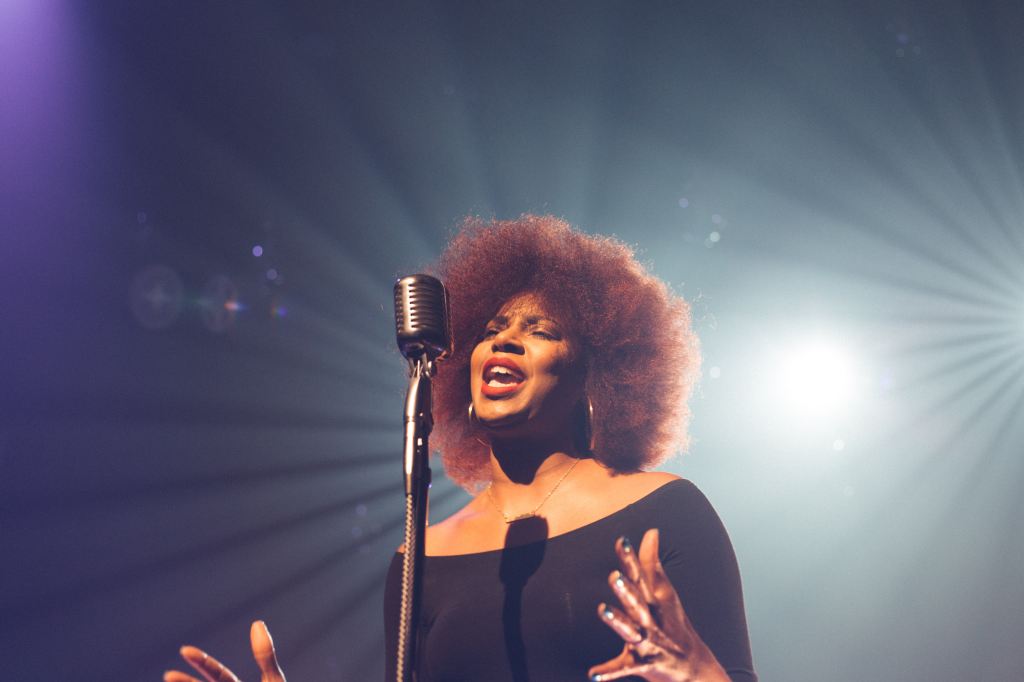
Identifying your unique strengths is key to success. Knowing where you shine will inform almost every artistic decision you make: (1) what roles to pursue, (2) what audition materials to use, and (3) how you present yourself to the world/industry/public. In an earlier blog entry about audition song selection, I touched on the idea of showcasing your unique strengths. But, what do I really mean by that? Here’s how I work through this with my students.

To state the obvious, your unique strengths are those assets and abilities you have that make you stand out from the average.

Now, how on earth are you supposed to know what your unique strengths are? What an awkward question.

That’s where a coach comes in. Having an outside professional, whether me or someone else, work with you on identifying your strengths can help bring needed perspective and clarity to this question. You may not have heard a bunch of people in your city sing or perform, so how are you supposed to know where you fit? Your coach has, and can bring that knowledge to the table. For example, I once told a student who was auditioning for a rock musical, “the panel is going to hear over a hundred pretty girls who can sing. But they aren’t going to have that many who can sing a rock song like you, so let’s feature that in your audition.”

What qualifies as a unique strength? By “unique” I don’t mean “only one in the world;” I mean more than or higher than average. When I ask my students what their unique strength is, I’m often provided with this answer: “singing!” To which I teasingly respond, “singing what?” and that’s when I get the blank stare.

To successfully identify your unique strengths, you will need to get specific. There’s a ton of amazing singers out there! What are YOU specifically good at? Can you belt up high like a gospel singer? Are you so powerful you don’t need a microphone? Do you have a rich, velvety lower range? Can you spit out “Speed Test” faster than anyone? Can you move anyone to tears with your heart-wrenching ballad?

Of course, you may not have a unique strength related to singing. What other possible unique strengths are there? How about look – do you look particularly young or old for your age? Are you particularly tall or short? Can you tap dance? Play a musical instrument? How about dialects? The possibilities are endless!

So, what are YOUR unique strengths? Once you know what they are, you can begin to feature them more and really start elevating your auditions and performances.

Break a leg out there!

Let’s face it – auditions can really, really suck. You stress about them, you get more and more nervous as the day approaches, you enter the room and your heart is in your throat. Every time, you ask yourself “Why do I put myself through this? Why do I do this to myself?” Of course, you know the answer – it’s because you love theatre and you love to perform. Still, you’d pretty much rather be anywhere else than that room at that moment.

Auditions are a necessary evil. As someone who has been on both sides of the table, no one enjoys it – even the directors and producers would probably rather be elsewhere and not listening to fifty different versions of “Memory.” But, there are ways to get more out of the experience besides a stomachache and unwanted cardio from your hamster-esque heart rate.

So, without further fanfare, here are ten tips to beat the audition blues:

  1. Set your mind on a goal for the audition. It is extremely important to set goals that are within your power to achieve. Accordingly, “getting cast” isn’t a helpful goal, as that is not up to you. Some goals my students have set include “feeling good walking out of the audition,” “singing a rock song for an audition,” “going to one audition a month,” etc. If we focus on goals that are within our power to achieve, the importance of others’ opinions starts to fade.
  2. Select an excellent song for the audition, one that shows you off at your best and one that you really enjoy singing. I have some guidance for audition song selection here. Be prepared to answer questions about your audition song (composer, show, character, plot, etc.).
  3. Prepare your song well – you should be able to sing your audition song well no matter what else is happening in the room. I tell my students “we want you to be able to keep going even if the USC Marching Band starts marching into the room with their tubas and drums.” Whether or not you will remember your lyrics or notes should not be a concern at this point; if it is, you are putting unnecessary stress on yourself. There are so many variables that you will not be able to prepare for; perhaps the accompanist isn’t very proficient, perhaps the director is falling asleep right in front of you, perhaps there’s loud construction happening outside and there’s a loud BANG in the middle of your song. You can’t control any of these things, but you CAN control how prepared you are and whether you are solid on your material.
  4. Have your audition outfit selected and tried on at least 24 hours in advance. I mean the ENTIRE OUTFIT, including your shoes. Pick it out, try it on, make sure everything fits and is clean and wrinkle-free (unless your character calls for something else). Then, take it off and put everything somewhere safe where you can just grab it the next day.
  5. If you will be singing, make sure your audition cut is clear and marked appropriately. It should be in a binder with as few pages turns as possible. If you aren’t sure whether the music is OK, ask me or other friendly accompanist to take a look for you.
  6. Pack extra headshots/resumés, just in case. If you’re singing, tuck a copy of your resume in the front of your binder so the pianist can see it.
  7. Fully warm up your voice and your body at home. Vocal warmups to get your voice going and gentle body warmups to alert your body and get yourself focused. Do a mini-version of the warmups after you arrive to refocus.
  8. Try to not arrive at the audition too early. You will need to allow for traffic, etc., but sitting there for too long will only increase the nerves. Ideally, you want to walk in, sign in, and have no more than a 5 minute wait. If you arrive earlier than that, wait in your car or go for a short walk outside.
  9. Think of the audition not as an audition but a performance. You’re here because you love performing, right? Well, now you have an audience and you get to perform for them! Even if it’s only for a minute, you get to strut your stuff and that’s something you love to do. The audition is about YOU, not them.
  10. Along those lines, remember that you have no idea what’s on the panel’s mind, and you never will. Don’t waste time trying to figure out what they want beyond what they tell you in the audition notice. They could have already pre-cast the role you want. Their mom could have passed away and they’re staring at you funny because you look just like her. They could have a horrible migraine and want to be anywhere else. They could have dated Stephen Sondheim so now they automatically dismiss anyone who sings Andrew Lloyd Webber – YOU JUST DON’T KNOW. And because you don’t know, don’t fill in the blanks. If you don’t get cast, that’s all it is. You didn’t get cast. Try to avoid “I didn’t get cast, and I’m sure it’s because……” as that will only get in your way the next time.

BONUS TIP: HAVE FUN! You get to play a role, even just for a minute. You get to be in front of people, you get to sing and/or act, and you get to strut your stuff! Make some art at your audition and forget about the torture of the process. If they love it, great! If not, also great! You don’t need to be cast to be validated – if you’ve followed these steps, you’ve done your best and that’s amazing!

Now get out there and break a leg!

My new business cards arrived and I am in LOVE! I’m really not very artistically-inclined when it comes to the fine arts – any of my friends who do graphic design will tell you I hire them quite often – but I’m super pleased with how they turned out.

Great news! You found out your local theatre is producing your favorite show, and YOU are going to audition!

First things first – what song are you going to use for your audition?

I help my students answer this question ALL THE TIME. I thought I would share how we figure this out together.

Our goals (all equally important):

  1. Selecting repertoire that shows off the performer at their very best.
  2. Connecting with and encouraging the panel to feel something.
  3. Making it easy for the panel to picture the performer in the role.

First and foremost, the universe must start with the audition notice and its requirements.  It is essential to only look at repertoire that is appropriate for the audition.  If it says to only audition with material from the show, your preparation/selection will be quite different than if you can come in with anything.

Second, if you were cast, where would you best fit? What role is best for you? This is the role that is best suited to your voice and your acting abilities, not necessarily the most fun role or your favorite role. This is where outside help can be very helpful; as humans we can’t always be objective when it comes to ourselves and where we best fit. It is also helpful to have an understanding of your unique strengths – what can you do that only a few others or no one else can?

Third, it is time to research.  Assuming you have a large universe of options, there are many, many different directions you can go using the information collected above.  I encourage you to start with your preferred role – have any of your vocal twins ever played the role or one of the similar roles you identified?  If so, this is a very good sign you are targeting the right role.  Make a list of all songs that your vocal twin has performed (or at least you can find on YouTube) of the same lyricist/composer and their contemporaries. 

Then, next level: which songs on the list match up best to the role you want? If the role you want mostly sings belty torch songs about love, then those are the songs on the list you want to focus on.  Same if it’s all patter songs in the role. 

Finally, in which of the remaining songs can you find the strongest opportunity to connect with the panel?  Make them laugh, make them cry, make their jaw drop, some sort of stand-out moment that you can deliver well.  You want to make the biggest possible impact; when they are sorting through all of the headshots at the end of the day, you want them to see you and say “Oh! He was the one who made me cry!” Or laugh, or think about a song differently, etc. This is the opportunity to show your unique strengths and make an impact!

Using these steps, you can find an audition song that will allow you to shine your very best, connect with the panel, and make it easy for them to picture you in the role. I help my students stay booked using this formula – and now you can too! Get out there and break a leg!

Whether you’re a seasoned pro or a beginning singer, it’s important to know who your “vocal twin” is – and you can definitely have more than one!

Who is your vocal twin? Your vocal twin is a well-known performer who:

  • is within ten years of your age;
  • has a similar vocal range and style to you; and
  • plays or has played roles that would be a good fit for you.

The purpose of finding your vocal twin is not to copy their every move; in fact, I highly discourage it. When it comes to repertoire selection, however, your vocal twin can be a goldmine!

It can be so overwhelming to pick a song for your audition book. “Golden Age Tenor Ballad” is unhelpfully generic and will generate a thousand results. However, if your vocal twin is Gavin Creel, take a look at what Golden Age repertoire he’s done, either as part of a role or in concert. His YouTube channel could help you map your audition book and find those songs that sit perfectly in your voice because he’s found the songs that fit perfectly in his.

It’s important when selecting your vocal twin(s) to be honest with yourself about your sound and to get outside opinions if possible. It can be very challenging to separate the type of singers you love to sing along with from the singers who actually sound like you. Believe me, I’ve had to come to terms with the fact that I do not sound like Mary Bond Davis or Bebe Neuwirth (much to my chagrin). I’m a soprano and my training is more classically based, so my vocal twins are singers like Audra McDonald and Kelli O’Hara. While we wouldn’t always play the same roles, their catalogues have been fantastic resources for me.

When it comes to selecting repertoire, the sheer volume of options can be so overwhelming. By finding your vocal twin, you help narrow the path to the perfect audition song!